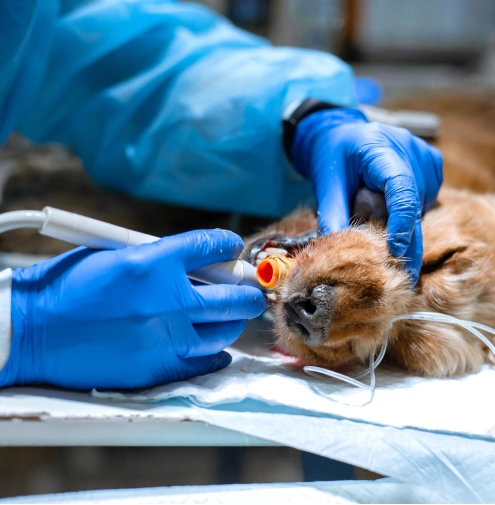
Protect Your Pet’s Dental Health
Dental health is vital to overall health. Yet it is estimated that over 80% of dogs and 70% of cats develop dental disease by 3 years of age. To maintain not only a hygienic and healthy mouth, but prevent the spread of harmful oral bacteria to the rest of the body, we recommend a comprehensive oral health assessment and treatment (commonly referred to a “professional veterinary dental cleaning”) once or twice a year.
Dental Examination
A dental exam will give our doctors at South Kendall Animal Hospital great indication of your pet’s overall health. When you bring your pet in for a standard wellness examination, our team will visually exam their teeth, gums, and mouth. If we identify any causes for concern, we will discuss any next steps with you, which may include a “professional veterinary dental cleaning.”
Common symptoms of dental disease include:
- Bad breath
- Redness of the gums
- Excessive drooling
- Difficulty chewing
- Plaque on the teeth & gum-line
- Decreased appetite
- Teeth chattering, grinding the teeth
- Weight loss
- Sneezing & Nasal Discharge
- Irritability
Professional Veterinary Dental Cleaning
A professional veterinary dental cleaning includes the following:
- A complete oral exam and radiographs (x-rays) to identify any problems beneath the gum-line. (This is similar to the x-rays you might receive from your own dentist.) Common painful problems that could be identified with radiographs are broken teeth and roots, periodontal disease, dead teeth, abscesses or infected teeth.
- A full cleaning under the gum-line where periodontal disease lurks. It would be impossible to clean this area on an awake dog or cat, but this is where periodontal disease begins with bacteria ‘living’ below the gum tissue.
- Professional scaling and polishing of the crown, or visible part of your dog or cat’s teeth. A veterinary cleaning does require scaling or scraping the tooth to remove plaque and calculus. Scaling is completed to remove plaque and tartar build-up on the tooth crown. Last, the teeth are polished leaving a completely smooth surface of the tooth which discourages plaque and bacteria from adhering to the rough tooth surface.
Pet Dental Cleanings: What To Expect
Dental Care at Home
We encourage at-home dental care to decrease oral bacteria and plaque build-up in between exams and cleanings. We will discuss at-home dental care such as how to brush your pet’s teeth, and suggest products such as pet toothpastes, toothbrushes, oral solutions, treats, and toys.
You can view veterinarian approved products on the Veterinary Oral Health Council website.
Reasons not to Choose Anesthesia Free Dentals for Your Pet
Anesthesia Free Pet Dental Cleanings - Know the Facts.